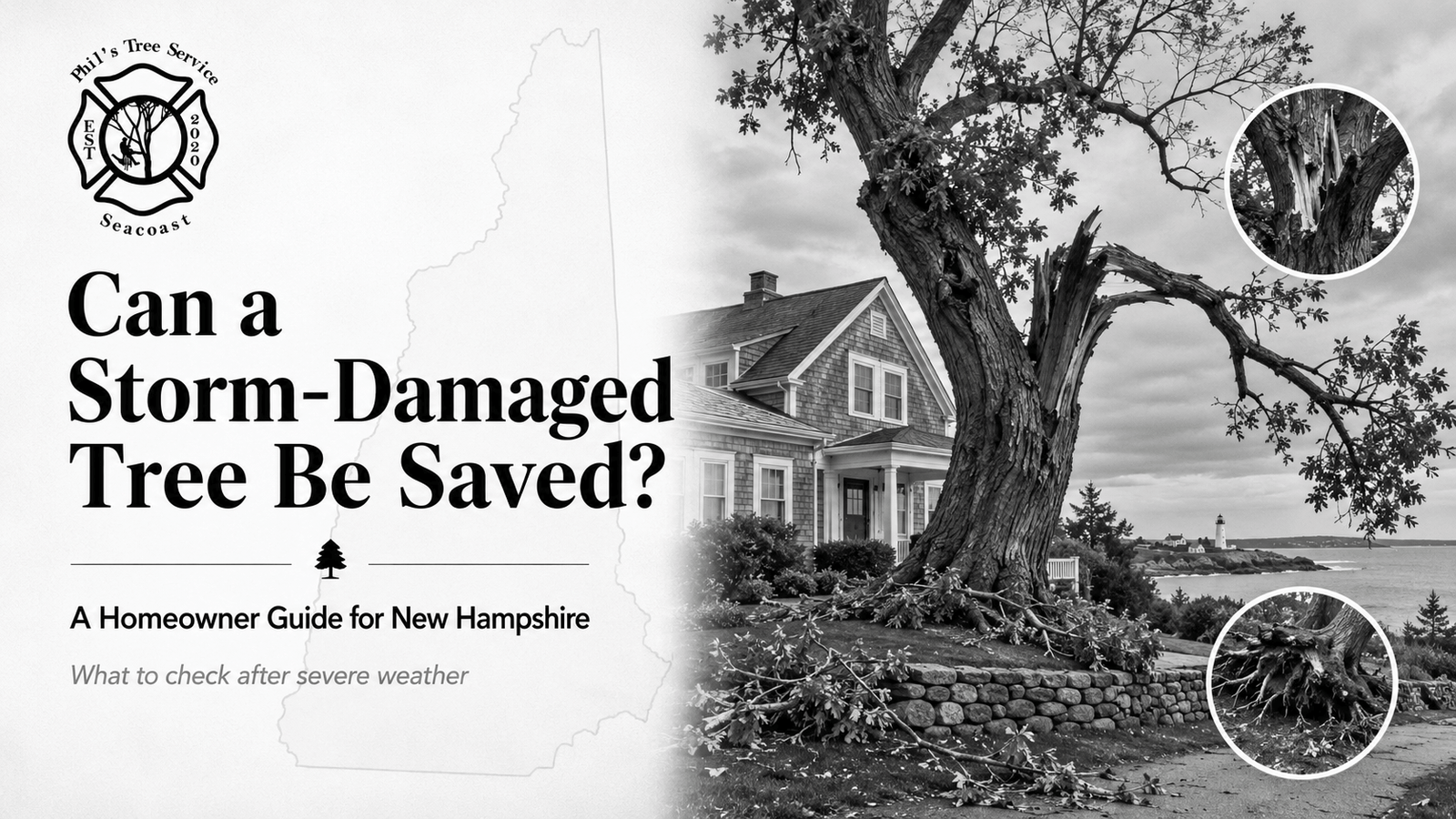
A storm-damaged tree may be saved when its trunk, main branch structure and root system remain stable and enough healthy canopy is left to support recovery. Removal is more likely when the trunk is split, the root plate has lifted, the tree has developed a sudden lean or major structural sections have failed.
Do not make the decision based only on appearance. A tree that looks severely damaged may recover with correct pruning, while a tree that appears mostly intact may have hidden trunk or root failure.
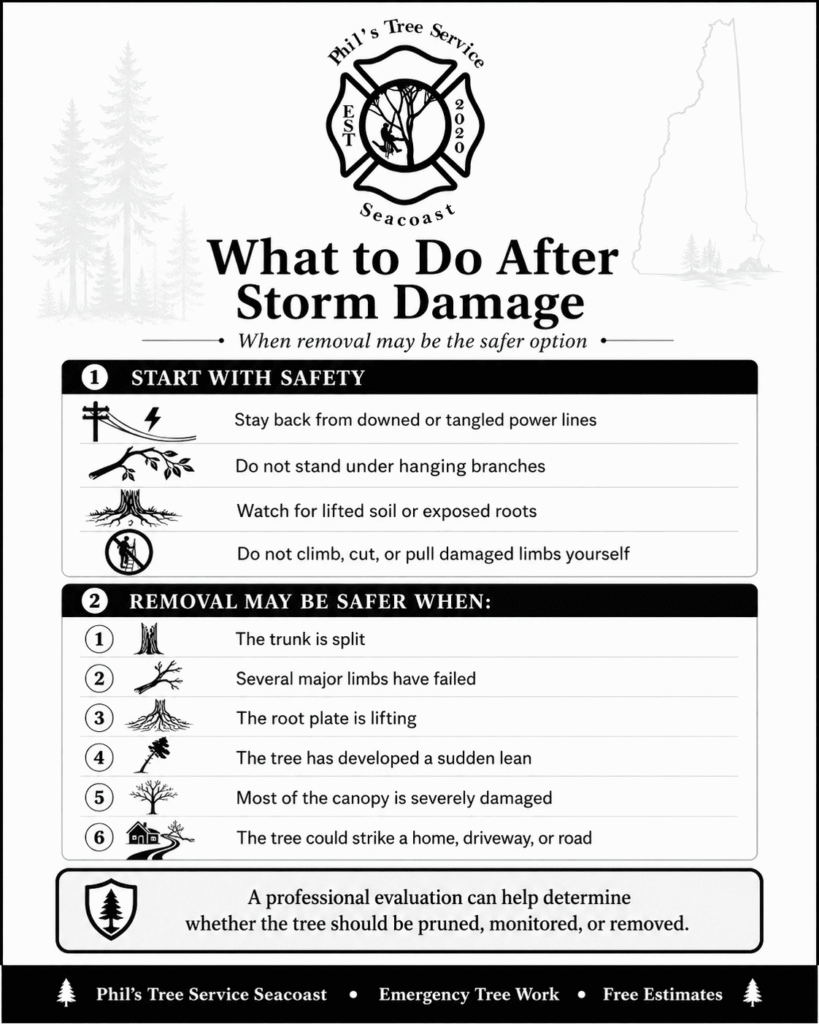
What Should You Do Immediately After a Storm?
Start with safety rather than cleanup.
Stay away from the tree when:
- A branch or trunk is touching a power line
- Wires are on the ground
- The tree is leaning over a building or road
- The soil around the roots has lifted
- Large limbs are hanging overhead
- The trunk is cracked or partially split
- The tree is continuing to move in the wind
Always assume a downed wire is energised. Eversource advises residents to stay away from downed lines and from trees that may have wires caught in them, then report the hazard to the utility or emergency services.
Do not climb the tree, use a ladder, operate a chainsaw beneath suspended limbs or pull branches away from electrical equipment.
Signs a Storm-Damaged Tree May Be Saved
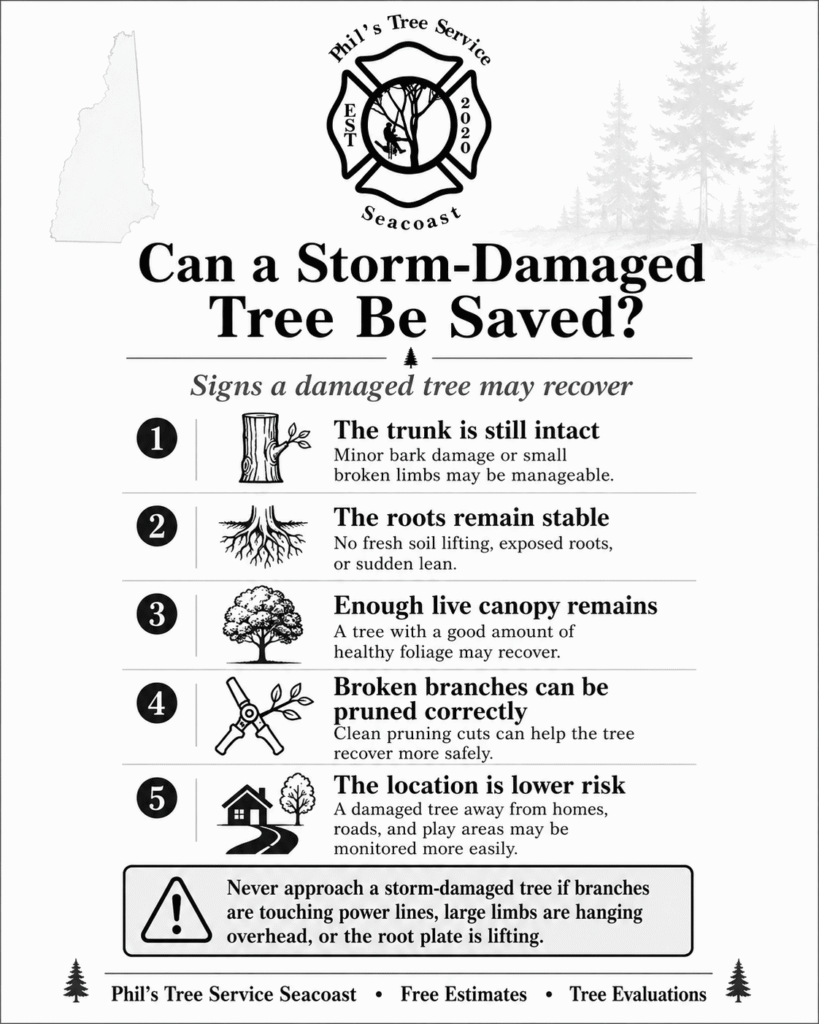
The main trunk remains intact
A tree has a better chance of recovery when the trunk is not split, deeply cracked or separated at a major union.
Minor bark damage and the loss of smaller branches may be manageable. Damage extending deeply through the trunk or a major co-dominant stem is more serious.
The root system remains stable
Walk around the tree from a safe distance. Look for:
- Freshly lifted soil
- Exposed roots
- Cracks in the ground
- A new lean
- Movement at the base
- Roots torn from the soil
A tree may still have green leaves after its roots have started to fail. Root movement is therefore a more urgent warning sign than temporary leaf loss.
Enough live canopy remains
Trees need healthy foliage to produce energy. A tree that retains a balanced amount of live canopy may recover after damaged branches are removed.
UNH Extension recommends retaining as many healthy branches as practical while removing severely damaged wood and reducing future hazards.
Broken branches can be pruned correctly
Cleanly removing broken branches can help the tree seal the damaged area and rebuild a safer structure.
Storm-damaged branches should be pruned back to an appropriate branch collar or strong lateral branch rather than cut flush against the trunk or left as long, splintered stubs.
The tree is in an acceptable location
A tree that can be monitored in a distant woodland area presents a different level of risk from a damaged tree over a bedroom, driveway, school entrance or public road.
Location does not determine whether a tree is biologically alive, but it changes how much risk is acceptable.
Signs Removal May Be the Safer Option
A professional may recommend removal when:
- The main trunk has split
- Several major leaders have failed
- The root plate is lifting
- The tree has developed a sudden lean
- Decay is visible inside a broken section
- Most of the remaining canopy is dead or severely damaged
- The tree was already declining before the storm
- Damage has made the tree likely to strike a structure or utility line
- Stabilising or pruning the tree would not reduce the risk sufficiently
Large storm-damaged trees should be evaluated and worked on by qualified professionals. UNH Extension specifically advises that trees too large to handle safely from the ground should be pruned by professional arborists or tree-care specialists.
Can You Simply Cut Off Every Broken Branch?
No. Removing too much live growth at once can place additional stress on the tree and leave large wounds.
The goal is not to make the tree look perfect immediately. The first priorities are:
- Remove immediate hazards.
- Make proper cuts on broken branches.
- Preserve viable canopy.
- Allow time for recovery.
- Reassess the tree for follow-up pruning.
Some trees benefit from staged corrective pruning over several seasons rather than one aggressive cleanup.
Should You Seal or Paint the Cuts?
Routine pruning paint is generally not needed for ordinary pruning wounds. Correct cuts and clean tools are more important.
Do not attempt to fill a split trunk with concrete, wrap severe cracks with household materials or bolt a tree together without professional guidance. Structural support systems must be designed for the individual tree and inspected over time.
Why Storm Damage Can Be More Serious on the NH Seacoast
Seacoast trees may experience heavy wet snow, ice accumulation, strong coastal winds and waterlogged soil. These conditions can load branches while also reducing root anchorage.
Damage may not become obvious until days or weeks later. After a major storm, inspect trees near the house, driveway, play areas and utility lines even when no large branches have fallen.
Arrange a Post-Storm Tree Evaluation
Phil’s Tree Service Seacoast provides emergency tree work, storm cleanup, professional pruning, tree evaluations and crane-assisted removals across Lee and surrounding New Hampshire communities.
The company uses cranes, chippers, skid steers and other specialist equipment to handle hazardous trees while reducing impact on lawns, driveways and nearby structures.
Contact Phil’s Tree Service Seacoast for a free estimate when a tree has broken limbs, a new lean, lifted roots, trunk damage or branches suspended over your property.
Frequently Asked Questions
Can a tree survive after losing a large branch?
Possibly. Survival depends on where the branch broke, how much canopy remains, whether the trunk was damaged and whether the wound can be pruned correctly.
Can a leaning tree straighten itself?
A young tree with minor movement may sometimes recover, but a mature tree that suddenly leans after a storm may have root failure. Treat a new lean as a potential hazard.
Should I remove broken branches immediately?
Branches creating an immediate hazard should be addressed promptly. Other corrective pruning may be planned after the tree has been evaluated.
Who should I call when a tree falls on a power line?
Stay away and contact the electric utility or 911. Do not call a private tree company to begin work until the electrical hazard has been controlled.