Tree removal services involve the safe cutting, dismantling, and removal of trees from residential or commercial properties. This may include removing the entire tree, cutting it into manageable sections, hauling away debris, grinding the stump, or using special equipment for difficult removals.
A professional tree removal service in NH is often needed when a tree is too close to a home, leaning toward a structure, damaged after a storm, affected by disease, or too large to remove safely without proper equipment.
Some trees can be removed with standard cutting and rigging methods. Others may require a crane, bucket truck, climbing equipment, or additional crew members to control how each section comes down.
This is why tree removal is not usually a simple flat-rate service. The price depends on the risk, labor, time, access, and cleanup involved.
Tree removal service pricing factors can vary from one property to another. Two trees may look similar from the street, but the job can be very different once a professional inspects the trunk, branches, location, lean, and surrounding structures.
Here are the main factors that affect tree removal service cost.
Larger trees usually cost more to remove because they take more time, labor, and equipment. A tall tree may need to be removed in sections instead of being cut down at once.
Height, trunk width, branch spread, and overall weight all matter. A large tree near a house or driveway may also require more careful rigging to prevent property damage.
Dead, cracked, hollow, or diseased trees can be more dangerous to remove. A tree that looks weak may break unexpectedly during the job.
Hazardous tree removal services often require extra planning because the crew needs to control the tree carefully while reducing risk to workers, homeowners, and nearby structures.
If you are unsure whether a tree is safe, a tree health consultation can help determine whether the tree should be removed, pruned, or monitored.
A tree in an open yard is usually easier to remove than one near a home, garage, fence, pool, septic area, or power line.
Limited access can also affect the price. If equipment cannot easily reach the tree, the crew may need to climb, carry debris farther, or use smaller tools. This can add time to the job.
Emergency tree removal service usually costs more than a scheduled removal because the situation may involve urgent response, storm hazards, blocked access, fallen limbs, or damage to a structure.
If a tree falls on your driveway, roof, garage, or power lines, do not try to remove it yourself. The safest step is to call a professional emergency tree removal service and, if power lines are involved, contact the utility company as well.
Some jobs require standard chainsaws, ropes, and rigging. Others may need a bucket truck, grapple saw, crane, or other equipment.
Large tree removal service may cost more if specialized equipment is needed, but the right equipment can also make the job safer and more efficient. For trees in tight spaces or near structures, crane tree removal service may be the safest option.
Tree debris removal services may be included in the quote, or they may be listed separately depending on the company and scope of work.
Cleanup can include cutting logs into sections, hauling branches, chipping brush, removing wood, or leaving firewood-sized pieces behind if requested.
If your property has a lot of branches, storm debris, or brush, brush chipping services can help clear the area faster.
Tree removal and stump grinding services are often connected, but they are not always included in the same price.
After a tree is removed, the stump can be left in place or ground down below the surface. Many homeowners choose stump grinding after tree removal because it improves the appearance of the yard and makes mowing or landscaping easier.
Tree removal service cost depends on the details of the job. A small tree in an open area will usually be easier and less expensive to remove than a large, storm-damaged tree leaning toward a house.
The most accurate way to understand tree removal service prices is to schedule an inspection and get a quote based on your property.
A professional tree removal company will usually look at:
Online estimates can give a rough idea, but they often miss important details. A tree that looks simple in a photo may have hidden risks, especially if it is dead, cracked, leaning, or surrounded by obstacles.
Tree removal may be necessary when a tree becomes unsafe, unhealthy, or no longer suitable for the property.
Common reasons for tree removal include:
Some trees do not need to be removed right away. In some cases, tree pruning service can help reduce weight, remove weak branches, and improve the tree’s structure.
That is why an inspection is helpful. A professional can tell you whether removal, pruning, or monitoring is the best next step.
Emergency tree removal may be needed when a tree creates an immediate safety risk.
Call for emergency help if:
Storms can leave trees unstable even if they do not fall completely. A cracked trunk or hanging limb can still come down later, especially with more wind, rain, snow, or ice.
For storm-related damage, storm clean-up services can help remove fallen limbs, broken branches, and tree debris from the property.
Crane-assisted tree removal is used when a tree is too large, too close to structures, or too risky to remove with standard methods.
A crane tree removal service may be recommended when:
With crane-assisted removal, sections of the tree can be lifted away instead of dropped. This can reduce damage to lawns, landscaping, fences, roofs, and nearby trees.
It is especially helpful for large tree removal service jobs across residential properties where space is limited.
After the tree is removed, the next step is cleanup.
Depending on the quote, this may include:
Professional tree debris removal services can make a big difference after the job. Without cleanup, homeowners may be left with heavy logs, piles of branches, and scattered debris.
If you want a cleaner finish, ask whether debris hauling, brush chipping, and stump grinding are included before approving the work.
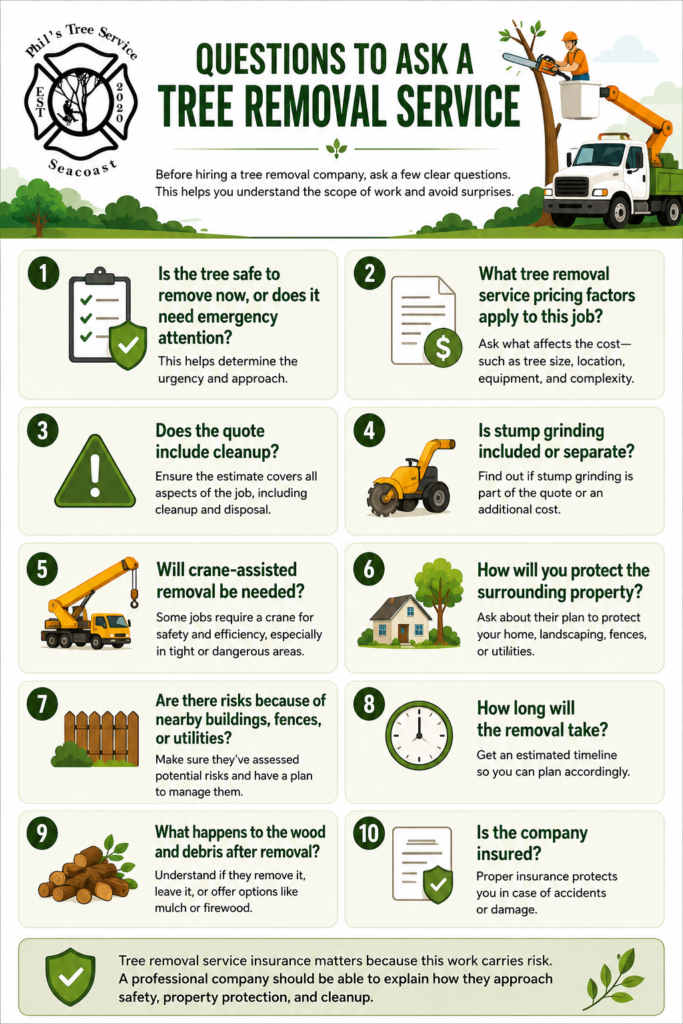
Before hiring a tree removal company, ask a few clear questions. This helps you understand the scope of work and avoid surprises.
Here are good questions to ask:
Tree removal can look simple from the ground, but it is one of the more dangerous outdoor jobs for homeowners to handle alone.
Trees are heavy. Branches can swing, split, or fall in unexpected directions. A leaning tree may shift once cutting begins. A dead tree may break apart before anyone expects it.
DIY removal can also damage roofs, vehicles, fences, sheds, lawns, and nearby trees. In worse cases, it can lead to serious injuries.
Hiring a professional tree removal service helps reduce these risks. The crew can assess the tree, plan the safest removal method, use proper equipment, and handle the cleanup afterward.
Homes across the NH Seacoast face a mix of tree-related issues, from winter storm damage to aging trees, heavy branches, soft soil, and dense wooded areas near homes.
Professional tree removal services can help protect your property before a weak or damaged tree becomes a larger problem.
Whether you need planned tree removal, emergency tree removal, crane-assisted tree removal, stump grinding, or storm clean-up, the best first step is an on-site evaluation.
Tree removal service cost depends on the size, condition, location, urgency, equipment, cleanup, and stump grinding needs of the job. That is why the most accurate quote comes from a professional inspection, not a general online estimate.
If you are concerned about a dead, leaning, diseased, storm-damaged, or overgrown tree, do not wait until the next storm makes the decision for you.
Phil’s Tree Service offers professional tree removal services across the NH Seacoast, including emergency tree removal, crane-assisted removal, storm clean-up, brush chipping, and stump grinding.
Contact Phil’s Tree Service today to schedule an estimate and find the safest way to remove problem trees from your property.
Tree removal service cost is affected by tree size, condition, location, access, urgency, equipment needed, cleanup, and whether stump grinding is included.
Emergency tree removal may cost more than scheduled removal because it often requires faster response, added safety precautions, storm cleanup, or more complex removal work.
Stump grinding is optional, but many homeowners choose it to improve the yard’s appearance, prevent mowing issues, and make future landscaping easier.
Tree removal may be needed if the tree is dead, severely diseased, structurally unstable, leaning dangerously, or damaged beyond recovery. Pruning may be enough if the tree is healthy but has weak, crowded, or overextended branches.
Yes. Crane-assisted tree removal can be used for large, hazardous, or hard-to-access trees, especially when the tree is close to a home, driveway, garage, fence, or other structure.